

US earnings season is the primary catalyst for reassessing equity valuations, providing investors with fresh evidence on whether corporate fundamentals continue to justify elevated market valuations. This reporting season arrives with expectations already set high after an exceptional quarter that propelled the index to a record high. As companies begin reporting, the focus will extend beyond whether they beat forecasts to the strength of forward guidance.
Recent earnings performance has demonstrated continued resilience across Corporate America, with a significant proportion of S&P 500 companies exceeding analyst expectations. These results have contributed to positive market sentiment and reduced concerns that higher borrowing costs and slower economic growth would significantly weaken corporate profitability.
.png?format=pjpg&auto=webp&width=1536&quality=75&branch=main)
The performance of the Magnificent Seven companies has remained a key focus for market participants. Several of these companies reported results that exceeded revenue expectations, highlighting the continued importance of large technology companies within broader equity market performance. Collectively, these businesses continue to represent a significant component of US corporate earnings growth and remain closely monitored due to their influence on market sentiment.
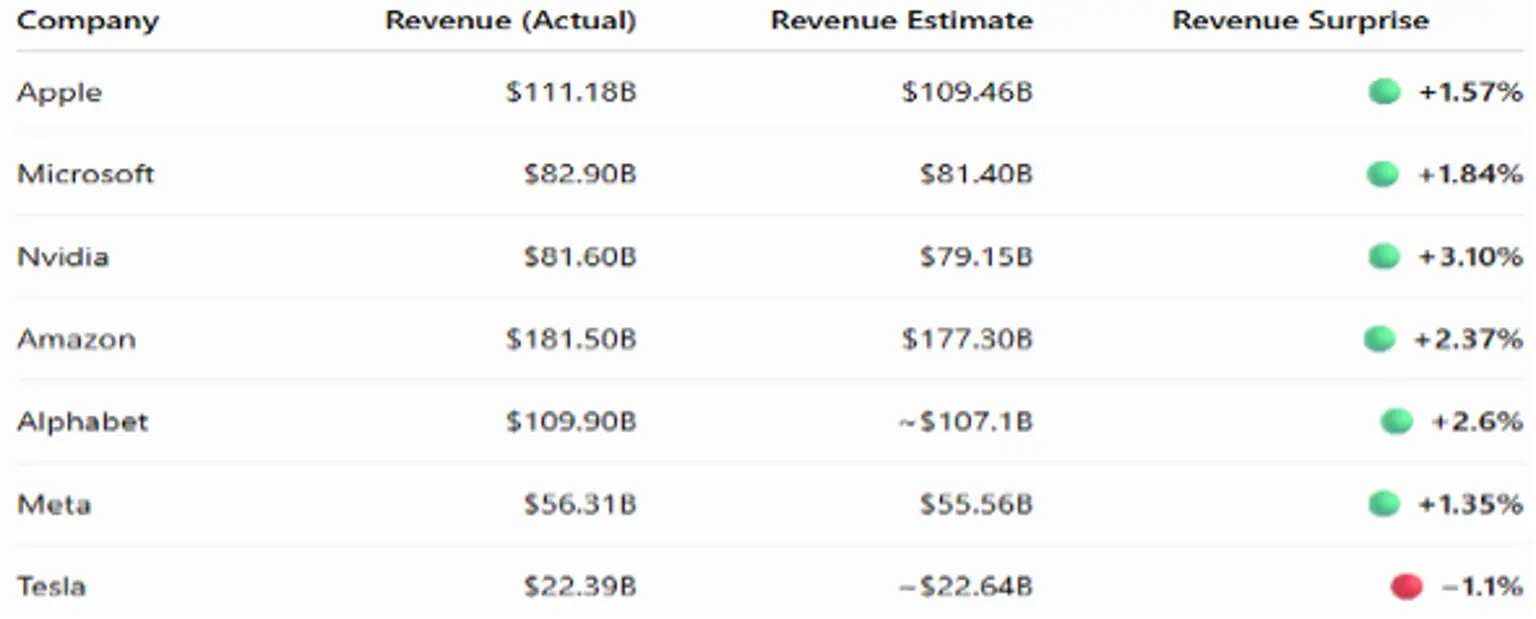
Technology remained the clear standout as these companies at the center of the AI ecosystem consistently delivered exceptional earnings growth, strong margins and robust forward guidance, providing investors with growing confidence that AI is translating into tangible financial return. The collective result from Q1 was another quarter where earnings revisions moved higher, valuations expanded further and US equity indices traded to record highs.
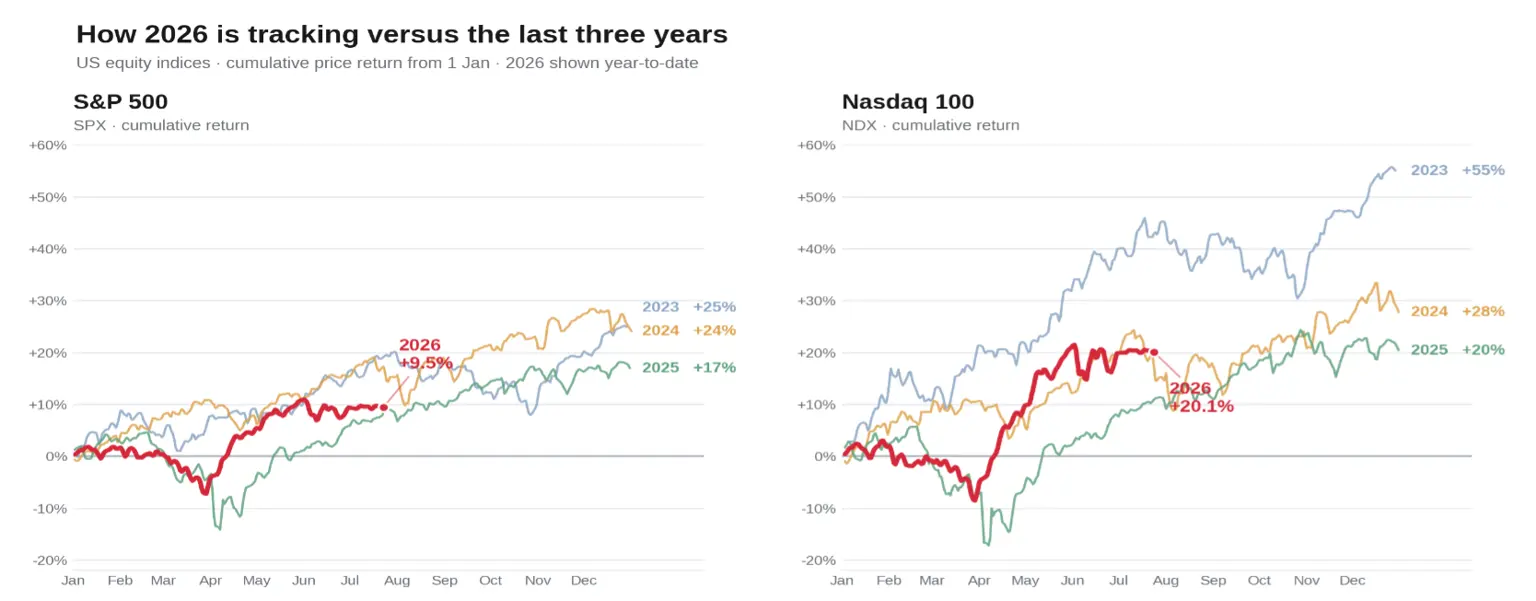
AI story continues to define corporate earnings
Artificial intelligence remains the single most important driver of corporate earnings and equity market leadership. What initially began as a semiconductor story has evolved into a much broader investment cycle spanning cloud computing, infrastructure, enterprise software, cybersecurity and digital infrastructure. Companies supplying the AI ecosystem continue to benefit from exceptionally strong demand as hyperscale cloud providers commit hundreds of billions of dollars towards expanding AI capacity over the coming years.
Capital expenditure plans among the largest technology companies remain aggressive, supporting revenue growth not only for semiconductor manufacturers but increasingly for businesses positioned throughout the broader AI supply chain. This spending has become increasingly self-reinforcing, with investment by hyperscalers generating earnings growth across chipmakers, networking providers, software developers and cloud infrastructure companies.
However, investor expectations have evolved from rewarding companies simply for discussing AI strategies. Investors expect measurable outcomes through accelerating revenue growth, expanding margins, improving cash flow and evidence that AI investment is generating commercially viable returns. This aspect in particular weight greater importance on management commentary on committed capital spending and has the potential to translate into negative stock reaction if failed to answer analysts’ questions regarding viability.
The debate is more than whether earnings justify valuations
Perhaps the most significant emerging trend is entering this reporting season is the nature of the market debate. Earlier in the rally, investors questioned whether corporate fundamentals could justify increasingly higher equity valuations. Following several consecutive quarters of stronger than expected earnings, the discussion has notably changed. Today, the question is less about whether earnings support current valuations and about how much of the market's momentum is now being driven by positioning and market structure rather than fundamentals alone.
Strong earnings performance has supported equity markets in recent periods, although valuations remain an important consideration for market participants. Factors such as investor positioning, passive investment flows, systematic trading activity and concentration within a relatively small number of large technology companies have also contributed to market movements.
While corporate earnings remain an important influence on equity performance, market prices can also be affected by broader factors including economic data, interest rate expectations, liquidity conditions and changes in market sentiment.
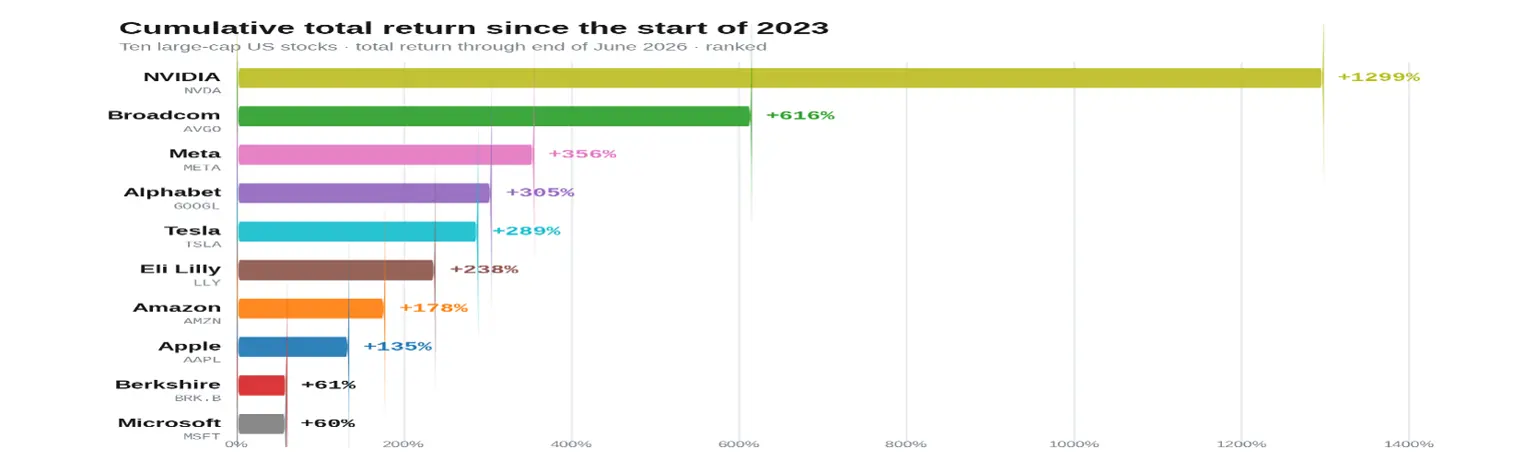
Higher expectations create a more demanding earnings season
Ironically, last quarter’s success has made this earnings season considerably more challenging. Analysts have steadily revised earnings forecasts higher following months of positive surprises, while equity markets have simultaneously pushed valuation multiples further above long-term averages. Companies are therefore reporting against meaningfully tougher expectations than they had quarters ago. However it is important to consider that past performance is not a reliable indicator of future performance.
Historical performance suggests that share price reactions are influenced not only by whether companies meet consensus forecasts, but also by how results compare with expectations already reflected in market valuations.Last quarter demonstrated this dynamic clearly with more than three quarters in SPX outperforming expectations and delivering robust guidance, investors have effectively reset the benchmark for success. Markets now forecast that AI leaders will continue producing exceptional growth and companies may need to deliver a robust round of outsized surprises while maintaining confident guidance to justify continuation of equity rally.
This reporting season may therefore place greater emphasis on forward guidance, including management commentary on AI investment, enterprise demand, pricing conditions, customer activity and capital expenditure plans. Companies that fail to meet elevated expectations may experience increased market volatility.
Can earnings broaden leadership?
A key question for markets is whether earnings strength can extend beyond a relatively concentrated group of technology companies. Financials, industrials, healthcare and consumer sectors may provide further insight into the broader health of corporate earnings.
Major US banks reporting early in the season will offer information on areas including credit conditions, consumer activity, lending trends, investment banking activity and business confidence. Industrial companies may provide insight into demand conditions outside technology-related sectors, while consumer-focused businesses may indicate how households are managing ongoing borrowing costs and economic pressures.
Broader participation across sectors could provide further information on the sustainability of current market trends, although economic and market conditions remain subject to change.
Markets are becoming selective
This reporting season may highlight increasing differences between companies that demonstrate stronger earnings performance and those facing greater challenges in meeting market expectations.
Companies associated with artificial intelligence have attracted significant attention, but future market performance may depend on a range of factors including earnings delivery, valuation levels, competitive conditions and broader economic developments.
As a result, share price reactions following earnings announcements may become more pronounced. Companies reporting results and guidance that differ meaningfully from market expectations may experience increased volatility, particularly in areas where valuations already reflect significant future growth assumptions.
Market participants will continue to assess whether corporate earnings, economic conditions and future expectations remain aligned as the reporting season develops.
The commentary is general market information, not a recommendation or advice.